N.Y. Times Reports ‘A Rising Appetite to Invest in Colored Diamonds’

%Jeweler NYC %NYC Wholesale Diamonds

“The Pink Star,” a 59.60-carat oval cut fancy vivid pink diamond, sold on Nov. 13 for $83.2 million at a Sotheby’s auction in Geneva. Described as the largest internally flawless diamond ever graded by the Gemological Institute of America, the stone was promptly renamed “The Pink Dream” by its buyer, the New York-based diamond cutter Isaac Wolf. It had been estimated at over $60 million.

A day earlier, Christie’s Geneva auctioned “The Orange,” a 14.82-carat diamond, billed as the “largest fancy vivid orange diamond in the world,” for $35.5 million. It had been expected to sell for $17 million to $20 million.

“Ten years ago the stone would have made a fraction of this price,” said Rahul Kadakia, head of jewelry for Christie’s Americas and Switzerland, referring to “The Orange.”

With big diamonds fetching such stratospheric prices this autumn, it is small wonder that the stones have held their value with collectors and investors. The reasons range from the rarity of the stones, especially the colored varieties, to the desire of wealthy investors to diversify their portfolios with tangible assets as a hedge against volatile equity markets.

Large diamonds have proven to provide good returns on investment in recent years. A 50.01-carat rectangular cut diamond that was sold at Christie’s New York in 2005 for $4.2 million came back to market last year and sold for $8.4 million. Both times, the diamond was purchased by the jeweler Laurence Graff, who had resold it in the interim.

Such large stones are purchased by individuals and jewelry firms with an “investment element always present,” Mr. Kadakia said, adding that the fact that Mr. Graff was willing to pay twice as much the second time around was “a very clear indication of the direction for the rare diamond market.”

On Oct. 7, Sotheby’s Hong Kong sold a 118.28-carat oval brilliant-cut diamond billed as the “greatest white diamond ever to appear at auction” for $30.6 million after a six-minute bidding war, while another brilliant-cut diamond weighing 20.05 carats went for $4.06 million.

“There will always be a market for stones from 1 carat to 10 carats, but at 50-100 carats we are looking at an elite buying field, and the rarer they are, the better they fare,” Mr. Kadakia said.

Colored diamonds are continuing to climb in value as the market realizes that the supply is dwindling. The Rio Tinto’s Argyle mine, which produces more than 90 percent of the world’s natural pink diamonds, is expected to be closed in 2020.

On October 14, Argyle held its annual sale to invited members of the trade: a single bid per stone for each of the 64 lots on offer. Two price records were broken: the Argyle Phoenix, a 1.56-carat fancy red diamond, fetched the highest price per carat for a diamond ever produced from the Argyle mine, selling for more than $2 million.

“In the colored diamond world $1 million per carat is now normal, which in itself is a headline,” Mr. Kadakia said.

John Glajz, a diamond wholesaler and seasoned bidder who bought the Argyle Phoenix along with another nine stones, said he was “a little surprised” at how high the prices went.

“I expected to win more stones as I bid quite bullishly,” he said. “I have seen the demand for these rare and beautiful stones continue to grow over the past years. The perception that they may become extinct in the not too distant future is a factor.”

Wealthy individuals have been investing in diamonds as a secure asset in an uncertain environment of low interest rates, according to Wealth-X, a consulting and research firm specializing in the habits of ultrahigh-net-worth individuals, those with net worth of at least $30 million.

The recent anonymous purchase of the $30 million egg-size diamond from Sotheby’s “is yet another demonstration of the rising prices, and associated investment strength of diamonds,” said Mykolas D. Rambus, chief executive of Wealth-X.

Of course, many wealthy individuals also own diamond jewelry as fashion items. But the trend toward using gemstones to supplement or balance an investment portfolio seems to be growing, as evidenced by the prices of large gemstones.

An added component of their investment value is that reselling the stones, even if they have been purchased at a premium price, is “not difficult” given their rarity, Mr. Glajz said.

“I have bought Argyle tender stones from the secondary market — i.e., from other successful bidders or their clients — and I have been known to repurchase tender stones that I sold to various clients in previous years, and pay substantially more than my original selling price to them,” he said.

The prices of white diamonds — the classic, clear stones that, while rare, are not as rare as their colored counterparts — peaked in mid-2011, according to Edahn Golan, founder of Edahn Golan Diamond Research & Data.

“So far this year, prices are very stable, fluctuating by about 2 to 4 percent, depending on the size of the diamond,” he said.

Round diamonds smaller than three carats have had average price increases of 8 percent to 33.5 percent since 2004, while prices of larger round diamonds have increased much more. Three-carat diamonds have increased 77 percent, four-carat diamonds by more than 140 percent and five-carat diamonds by 112 percent since 2004, he said.

But as with any market that seems too hot to cool down, caution is advised, investment managers say. People should not jump in too enthusiastically, they say, and they should not go in alone.

“Colored diamonds belong to a select market whose participants are seldom affected by economic conditions, thus creating a natural hedge,” said Eli Butnaru, chief executive of Mora Wealth Management.

Mr. Butnaru said he did not actively encourage his clients to invest in gemstones. “In exceptional cases we would consider a 2 percent to 3 percent allocation in colored stones only,” he said. But even then, he advised against individuals’ bidding on the stones because they could not compete with professional bidders.

A fund that specializes in gemstones, Mr. Butnaru said, “has the ability to secure better prices than those obtained by individuals, and more importantly, with an exit strategy.” Certain funds also have expertise on how the stones are cut and polished, and can actually improve the value of a purchase, he said.

A sign of the times: The Singapore Diamond Investment Exchange, which markets diamond funds, has seen its volume grow sevenfold, to $20 million this year from $1.5 million last year.

“We are confident to double this amount in 2014,” said Alain Vandenborre, chairman and founder of the exchange, which recently changed its name from the Singapore Diamond Exchange to avoid confusion with traditional diamond exchanges, where the stones are bought and sold by merchants and jewelers.

Investors interested in a diamond portfolio with the Singapore exchange will need a minimum investment of $1 million. Most of the portfolios the exchange has sold to date contain stones from 2 to 10 carats, though the exchange has also sold large stones in the range of 15 to 20 carats.

Although initial demand came from the Asia-Pacific region, most of the new investors are coming from Europe and Russia, Mr. Vandenborre said.

“Our portfolios have performed between plus 3 percent to plus 10 percent for the first half of 2013,” he said, adding that all the exchange’s portfolios have outperformed benchmark indexes.

“It is too early yet for us to see existing clients topping up in their initial portfolio, but what is encouraging is that we now have prominent clients who are referring us to their friends,” Mr. Vandenborre said.
Leave a Comment

Filed under Uncategorized

THE CASE FOR PLATINUM WEDDING BANDS

%Jeweler NYC %NYC Wholesale Diamonds

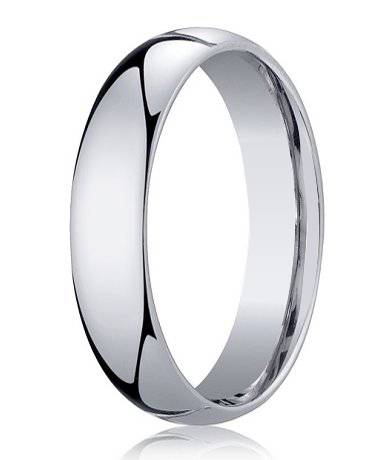
Here at NYC Wholesale Diamonds we are thrilled to help our happily engaged couples with our magnificent selection of quality wedding bands. The debate between platinum and white gold is complex, and really depends on many variables. The following is the case for why men should choose Platinum Wedding Bands.

Congratulations to all you soon-to-be grooms. Now that your wedding is only months away, your jewelry collection – just a watch, huh? – is about to increase by as much as 50 percent.

Meaning, it’s time to start thinking about what kind of wedding band you want for yourself.

Wedding bands have become the norm for men in recent years

– 97 percent of grooms in The Knot Market Intelligence’s “2011 Engagement & Jewelry Study” opted for one – so even if you have any doubts, your bride will probably set you straight. That means your only real decision is what kind of band best suits you.

To hear CNNMoney.com tell it, there are basically two camps: those who “don’t want to compromise” when it comes to quality (platinum bands), and those who feel they cannot afford the best and therefore need to settle (bands made from alternative metals). But, as jewelry expert Michael O’Connor points out, that doesn’t really give the whole picture.

“It’s true that platinum is so rare – 30 times more so than gold – that if all the world’s supply were melted and poured into an Olympic-size pool, it would barely reach your ankles,” O’Connor says. “But men’s platinum bands start at $500.”

That turns out to be pretty comparable to the cost of the two most popular alternative metals: titanium and tungsten carbide. Both are perhaps best known for being used to make fighter jets. Cool, right? Well, yes, but that also means they’re intrinsically lightweight and lack the heft of platinum.

“Most men prefer something that feels masculine on their finger,” says O’Connor.

There are other facts to consider, too. Tungsten and titanium jewelry will need special reconditioning if scratched, and cannot be resized. Even the more popular white gold will require rhodium replating to restore its white color due to wear over time. And while platinum – as all precious metals – can scratch, the metal is simply displaced on the surface of the ring, meaning very little metal is lost in wear. That makes it the most durable family heirloom that will last generations.

Still confused? Then ask yourself this question: How committed are you to your future wife?

If the answer’s what we think, then know that platinum has traditionally symbolized a relationship that will endure since it doesn’t fade or change color. “That’s the kicker for a lot of couples,” says O’Connor.


Leave a Comment

Filed under Uncategorized

Pamela & Stephane: Another Wonderful NYCWD Engaged Couple

%Jeweler NYC %NYC Wholesale Diamonds

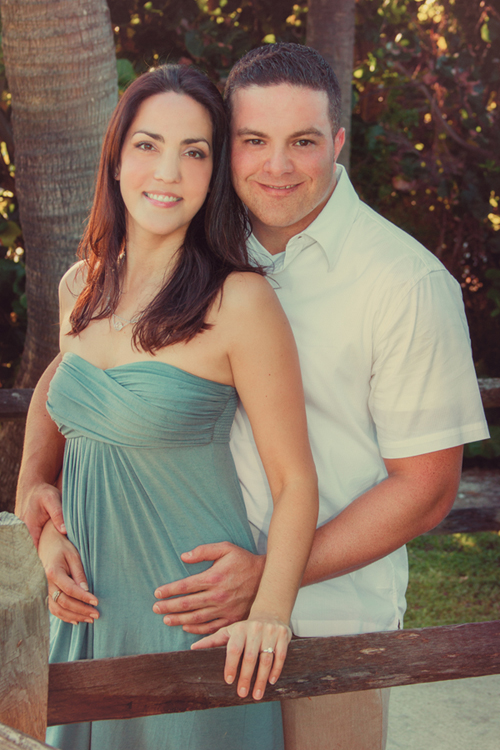
Here is the kind note Pamela and Stephane sent with this romantic photo:

We wanted to wait and get our surprise engagement pictures before writing to you, which we are sending one to you.
Pamela & I are so excited to be engaged (I surprised her on the beach on October 11th) and Pamela absolutely LOVE’s the ring!!! 
When I saw the ring for the first time (in person) It was just perfect! Keith, you have been there from the beginning of my search of the right diamond, the choice of the band and through countless exchange of emails, phone calls and lots of my worries and concerns but you always took the time and made time for me. Pamela has been getting so many compliments about her rings!
I am so grateful for all your help! You are a true gentleman and I consider you a friend. 
We both would like to say THANK YOU for being part of this memorable event! 
We will definitely contact you for our wedding bands! We are getting married on October 11th, 2014.
Best regards
Pamela & Stephane

Leave a Comment

Filed under Uncategorized

GIA’s new jewelry exhibit titled “More is More” has opened

%Jeweler NYC %NYC Wholesale Diamonds

If you have a flair for the glamour of old Hollywood and over-the-top jewelry, you’re in luck.

A new exhibit opened Friday at the Gemological Institute of America campus in Carlsbad, California titled “More is More.”

The show features pieces put together by famed Hollywood set and costume designer Tony Duquette and his partner Hutton Wilkinson.

To give you an idea of what you can expect at the show, Wilkinson was once quoted as saying, “If it’s not fabulous, it’s meaningless.”

“This is bling before bling with a capital B. Beauty is in the eye of the beholder. It’s not gaudy, unless you don’t own it,” GIA instructor Larry Larson said.

The exhibit runs through March 2014.

Keith J.Saxe, President of NYC Wholesale Diamonds earned his GIA Diamond Grading Certification in September, 1994 at GIA’s New York City location. There are only two GIA offices in the United States, in Carlsbad, Ca. and The New York Diamond District. GIA’s New York office will be moving from 580 Fifth Ave to 50 West 47th street directly across the street from NYC Wholesale Diamonds HQ in January 2014

Leave a Comment

Filed under Uncategorized

NYC WHOLESALE DIAMONDS 25th ANNIVERSARY OCTOBER NEWSLETTER

%Jeweler NYC %NYC Wholesale Diamonds

http://us5.campaign-archive1.com/?u=aed209c5b4df79f4207ea8500&id=5fb6ad92b1


Leave a Comment

Filed under Uncategorized

October Birthstones: Opal and Tourmaline

%Jeweler NYC %NYC Wholesale Diamonds

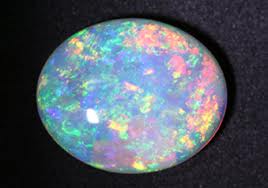
The name opal derives from the Greek Opallos, meaning “to see a change (of color).”  Opals range in color from milky white to black with flashes of yellow, orange, green, red, and blue. An opal’s beauty is the product of contrast between its color play and its background.  Opal is a formation of non-crystalline silica gel that seeped into crevices in the sedimentary strata. Through time and nature’s heating and molding processes, the gel hardened into the form of opals. The opal is composed of particles closely packed in spherical arrangements. When packed together in a regular pattern, a three-dimensional array of spaces are created that give opal its radiance. No stone has varied more in popularity and acceptance due to superstitions dating back over a century. NYC Wholesale Diamonds has a line of Fine Opal and Diamond Jewelry, and custom designes rings, necklaces, earrings and bracelets for our clients. Call (212) 719-2214 for an appointment or a quote.

Tourmaline has become a favorite gemstone among jewelry designer, and gem collectors the world over. Since it is available in a wide variety of colors, it is ideally suited to almost anyone’s taste. Tourmaline also is known for displaying several colors in the same gemstone.  These bi-color or tri-color gems are formed in many combinations; gemstones with clear color distinctions are highly prized.  One multi-color variety is known as watermelon tourmaline, and features green, pink, and white colors bands; to resemble its namesake, the gemstone is cut into thin slices having a pink center, white ring, and green edge.  Tourmaline is found in many localities including Brazil, Afghanistan, East Africa, and the USA. NYCWD has a line of Fine Tourmaline and Diamond Jewelry, and custom designes Tourmaline rings, necklaces, earrings and bracelets for our clients.


Leave a Comment

Filed under Uncategorized