Category Archives: Uncategorized

Diamond Mutual Funds are Coming

%Jeweler NYC %NYC Wholesale Diamonds

GemShares, a Chicago-based financial firm, has put into registration a physical diamond trust that follow by eight months or so the first round of news suggesting the firm was looking to patent a process for having diamonds become tradable securities.

The GemShares Physical Diamond Trust sets out to reflect the wholesale price of diamonds included in a fungible basket-called the “GemShares Global Investment Grade Standard Diamond Basket”-minus expenses, according to the filing submitted to regulators this week.

The filing is vague on the details. While it does say that each basket will consist of three “weight classes” of diamonds-each class comprising gems that meet specific weight criteria-it doesn’t say what that criteria is or what the total weight of each basket will be. Keith Saxe of NYC Wholesale Diamonds in The New York Diamond District feels “The ETF will at least initially contain only GIA Certified Brilliant Cut Round Diamonds of VS Clarity and G Color and above.

It also fails to disclose the custodian of the diamonds, or how much it will costinvestors to own shares of the trust. It does say that only authorized participants will be allowed to redeem shares for diamonds-an arrangement that seems akin to the way the SPDR Gold Trust (NYSEArca:GLD) is organized. GLD only allows redemption for physical gold for lots of 100,000 shares or more.

Diamonds neither have the financial history of gold nor do they work as a hedge against a falling currency, Index Universe’s Stacey Brorup pointed out in a blog last year.

In fact, only 30 percent of mined diamonds are of gem quality, meaning an investor who buys into GemShares’ trust would in theory be missing out on 70 percent of the market. Natural diamonds are also used industrially.

Still, GemShares is not the first to plan a physical diamond ETF Rye Brook, New York-based IndexIQ, too, put a diamond ETF into registration a year ago.

“The shares are designed for investors who seek a cost effective, transparent and convenient way of making an investment similar to an outright investment in physical diamonds,” GemShares said in the filing.

Diamonds included in the trust must meet certain physical and optical standards, as well as be a conflict-free gem, the filing said. No ticker was disclosed.


Leave a Comment

Filed under Uncategorized

How Diamonds Became Forever

%Jeweler NYC %NYC Wholesale Diamonds

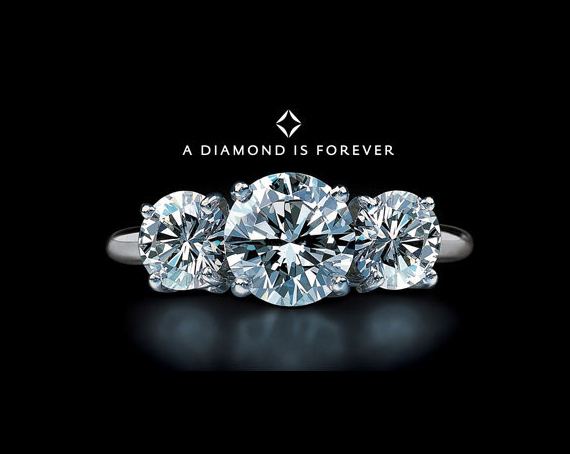
Peggy Olson, that emblem of the pioneering ad woman in a man’s world on the television show “Mad Men,” would have been all of 8 years old on the night in 1947 when the real-life copywriter Frances Gerety coined the phrase “A Diamond Is Forever.”

As Ms. Gerety recalled in a 1988 interview with a co-worker, Howard Davis, she had just finished a series of ads and was headed to bed when she realized that she had forgotten to create a signature line. Exhausted, she said “Dear God, send me a line,” and scribbled something on a slip of paper. When she woke up and saw what she had written, she thought it was just O.K. A few hours later, she presented her idea at a meeting. According to her, “Nobody jumped.”

When Ms. Gerety applied to work at the Philadelphia advertising agency N.W. Ayer & Son in 1943, she was told that her timing was perfect: the agency had just lost a female copywriter. At the time, women were usually hired to write for women’s products only. Her main account would be De Beers. For the next 25 years, she wrote all of the company’s ads.

Her counterpart in publicity was Dorothy Dignam, a plucky brunette who kept a list of questions male co-workers asked her in the drawer beneath her typewriter; things she was meant to know as a woman, like, “Could a winter hat have a bird’s nest on it? Is Macy’s singular or plural? What do you give a girl graduating from a convent? Is this thing an inverted pleat?”

Neither Ms. Gerety nor Ms. Dignam ever married. But their greatest professional achievement arguably was helping to create a sense of emotional attachment to the diamond engagement ring.

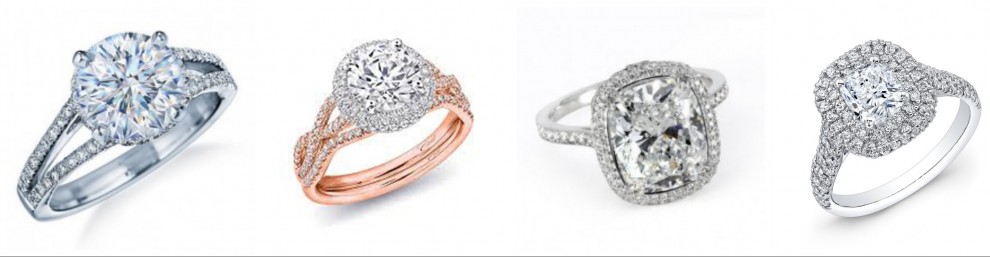
It’s hard to imagine a time when diamond engagement rings were not the norm; today, even after a decade and a half of bad press about blood diamonds and working conditions in the mines, among other concerns, 75 percent of brides in the United States wear one, according to Kenneth Gassman, president of the Jewelry Industry Research Institute.

Last year, Americans spent almost $7 billion on the rings. But in 1938, when a De Beers representative wrote to N. W. Ayer to inquire whether “the use of propaganda in various forms” might boost the sale of diamonds in the United States, their popularity had been on a downward trend, in part because of the Depression.

N.W. Ayer conducted extensive surveys of consumer attitudes and found that most Americans thought diamonds were a luxury for the ultra-wealthy. Women wanted their men to spend money on “a washing machine, or a new car, anything but an engagement ring,” Ms. Gerety said in 1988. “It was considered just absolutely money down the drain.”

Still, the agency set an ambitious goal: “to create a situation where almost every person pledging marriage feels compelled to acquire a diamond engagement ring.”

Because De Beers controlled the world supply of rough diamonds, antitrust laws prohibited the company from doing business in the United States. The ads could not promote De Beers, or even show pictures of jewelry, so the agency commissioned bold paintings by artists like André Derain and purchased pre-existing works by Dalí and Picasso.

“Sentiment is essential to your advertising, as it is to your product,” it counseled De Beers in a memo, “for the emotional connotation of the diamond is the one competitive advantage which no other product can claim or dispute.”

Ms. Gerety’s early copy sometimes bordered on the heavy-handed. A typical wartime ad read: “Star of Hope: The engagement diamond on her finger is bright as a tear — but not with sadness. Like her eyes it holds a promise — of cool dawns together, of life grown rich and full and tranquil. Its lovely assurance shines through all the hours of waiting, to kindle with joy and precious meaning at the beginning of their new life to be.”

Meanwhile, Ms. Dignam was busy making sure average consumers saw diamonds everywhere. Her theory was that “the big ones sell the little ones.”

Capitalizing on the country’s newest obsession, she wrote a monthly letter to newspapers describing the diamond jewelry worn by Hollywood actresses. She sometimes appeared as a guest columnist on the women’s pages, writing under the name Diamond Dot Dignam. (“Jimmy Durante’s valentine to his dream girl, Margie Little, was an eye-opening diamond ring. Rosalind Russell wears only two costumes in ‘The Guilt of Janet Ames,’ but one of them consists of three and three quarters pounds of diamonds and only two and a half pounds of foaming tulle and net and sequins.”)

In the 1950s, N. W. Ayer started lending jewels to socialites and starlets for the Academy Awards and the Kentucky Derby. The campaign was a success from the start. After just two years, the sale of diamonds in the United States increased by 55 percent. In its 1951 annual report, N. W. Ayer noted that, “for a number of years we have found evidence that the diamond engagement ring tradition is consistently growing stronger. Jewelers now tell us ‘a girl is not engaged unless she has a diamond engagement ring.’ ”

The company also succeeded in promulgating ideas like the Four C’s, which arose from a surplus of very small stones. Buyers had been taught that bigger meant better, and had no interest. So N. W. Ayer added a box labeled “How to Buy a Diamond” to every ad, with the instructions: “Ask about color, clarity, and cutting — for these determine a diamond’s quality, contribute to its beauty and value. Choose a fine stone, and you’ll always be proud of it, no matter what its size.” (The final “c” stood for carats.)

In the 1980s, the agency introduced a series of ads setting a new arbitrary but authoritative-seeming benchmark: “Isn’t two months’ salary a small price to pay for something that lasts forever?”

Some attempts at changing cultural attitudes were more successful than others. The agency briefly tried to get men interested in wearing diamond rings. A representative ad features a shaggy-haired couple in pajamas, playing checkers in bed: “She has a mind of her own. She gave me a diamond.”

The “Women of the World, Raise Your Right Hand” campaign of 2003 also met with some eye rolls, though it owed a debt to a 1965 series of Ms. Gerety’s that featured “bachelor girls, divorcées, widows, or career women buying ‘on their own’ as well as some married women,” according to her assignment. “That part of the market which for one reason or another is either less, or not at all, motivated by copy appeals rooted in love.”

Deanne Torbert Dunning, N. W. Ayer’s first female vice president on the creative side, wrote the account during the turbulent years of 1968 through 1970.

“You had Betty Friedan and ‘The Feminine Mystique,’ you had the Pill, and by 1970, you had a full-blown women’s movement,” she recalled by phone recently. “There was an anti-establishment feeling. Whatever my mother had, I don’t want. So the ads shifted to a more everyday, casual approach. They said, ‘Yes, you can get married barefoot on a beach, but don’t you still want a beautiful ring?’ ”

But one thing, at least, has remained firmly established: the line “A Diamond Is Forever,” which has appeared in every De Beers engagement ad since 1948. In 1999, two weeks before Ms. Gerety died at the age of 83, Advertising Age named it the slogan of the century.

The preceding was an article written by J Courtney Sullivan in the May 3, 2013 edition of the N.Y. Times


Leave a Comment

Filed under Uncategorized

U.S. Market Favors Bridal Jewelry, H SI Stones, Says De Beers

%Jeweler NYC %NYC Wholesale Diamonds


The U.S. diamond market is built on bridal jewelry and H SI stones, says a new market outlook from De Beers

The company’s surveys say the best-selling diamonds in the United States fall in the 0.5–0.99 ct. range, with H or better color and SI clarity.

The market also mostly favors bridal jewelry, with engagement ring sales outpacing other sales of other types of diamond jewelry.

Overall, the American market remains the biggest diamond consumer market, its overall share of the diamond market is falling. America’s share now stands at 37 percent, versus 42 percent in 2007, and around 50 percent at the beginning of the century. The U.S. diamond market grew some 5 to 6 percent percent in 2012, as did Japan’s. 

China now stands as the second biggest market, claiming 11 percent of the diamond consumer total, followed by Japan (10 percent), and India (9 percent). Last year, the Chinese market grew some 8 to 10 percent in dollar terms, while the Indian consumer market for diamonds contracted some 5 percent in dollar terms but grew 9 percent in local currency. 

For 2013, the company expects growth rates to consolidate in China; positive but lower-than-average demand growth in Japan; and a better picture to emerge in India.

Other market reports:

– In India and Japan, non-bridal multi-diamond rings were much more popular than in other major markets.

– Solitaire diamond products were prevalent in China, mainly for bridal occasions and wedding anniversaries.


Leave a Comment

Filed under Uncategorized

Gatsby Jewels

%Jeweler NYC %NYC Wholesale Diamonds

Movies and TV shows depicting life in the “Roaring 20s” have risen to prominence in pop culture as of late–namely PBS’ Downton Abbey and the upcoming feature film The Great Gatsby–leading to a resurgence of styles from this era, not only in clothing but jewelry as well.

Jewelry reminiscent of the Art Deco period includes streamlined and curved pieces, angular lines and geometric shapes. Filigree also is a common characteristic. Long earrings, cocktail rings and pearls are staples from this era, as are long necklaces with tassels. Tiffany & Co has launched a new collection with Catherine Martin, the costume designer behind Gatsby. The luxury brand- which designed all the jewelry for the upcoming movie took inspiration from their antique designs, with a modern twist. Opulent pieces from the collection evoke the Roaring 20’s. Jon King, Tiffany executive vice president said in a statement: ‘The jewelry symbolizes the story’s themes of wealth and privilege, and we approached its design with the utmost style and luxury in mind.’

Only shoppers with the most expensive tastes will be able to purchase these pieces at Tiffany, though, which cost up to $900,000 for a flower-shaped diamond ring.

But do not despair, NYC Wholesale Diamonds and it’s Fine Jewelry designer division are offering our collection of these styles at prices starting at $ 1,500.

British actress Carey Mulligan was constantly shadowed by a security guard on “The Great Gatsby” set because she was draped in diamonds worth millions of dollars for her role as Daisy Buchanan.

The “Drive” star wore luxurious pieces created especially for the movie by jewelers at Tiffany & Co, and executives at the company employed a guard to watch over the actress at all times.

Mulligan insists the security measures were distracting as she was constantly watched, even when she was trying to work.

She tells Britain’s Daily Mail, “I would be doing a scene, wearing these fabulous jewels from Tiffany’s worth many, many millions. There’d be diamond bracelets on each arm, and diamond earrings, and rings, and strings of pearls around my neck. And I could see this guy in the corner watching me intently, in case I ran off with anything.”


Leave a Comment

Filed under Uncategorized

The Best Time To Buy Your Wedding Bands

%Jeweler NYC %NYC Wholesale Diamonds
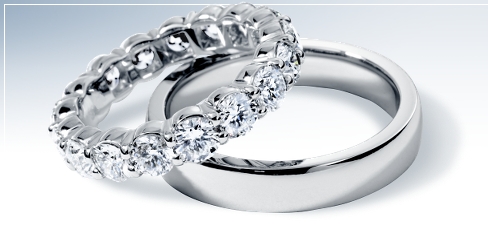
When you find that special someone to share the ultimate love with, the beautiful moment is celebrated with a promise, represented by your first keepsake – your engagement ring. It is a precious moment ‘frozen in time’, only equaled by the exchange of wedding bands
It is so important to select what you absolutely love. This is not a time to make a hasty decision. I hope to never again see a bride come to me, sobbing, saying that she hates her wedding band, asking my advice on how to change it without hurting the groom’s feelings. So, how do we avoid this pitfall and head toward marital bliss? It all starts with this simple, but vital advice I offer at the time of the engagement ring purchase:

“Do not buy your wedding bands at the same time you purchase your engagement ring.”
This statement is almost always met with reactions ranging from astonishment to confusion. The most common replies from the gentleman, or couple that have just chosen their engagement ring are:

“I love the quality, design and value of this engagement ring. Why don’t you want to sell us our wedding bands?”

“I trust you. I want to buy from you. Why are we waiting?
“I am so in love, and found who I want to share the rest of my life with. We’re ready to move ahead with all the planning and details. There’s so much to do. Can we just get this checked off our check list?
I explain that waiting is entirely in their best interest. Now that I have piqued their curiosity, and have their complete attention, it is time to offer my recommendation on the best time to buy their wedding bands and why.
The best time to buy your wedding bands is berween three and four months prior to your wedding. In the case of a shorter engagement period, the mid point between engagement and wedding is best; as long as it is six to eight weeks before the wedding
The primary reason not to purchase too soon is the same reason why the store selling you the engagement ring is pushing hard for you to buy immediately. The chances of the bride knowing the wedding band design she ultimately desires is very small at the time of engagement. Most brides think they know, but that opinion changes the vast majority of the time. This is because she has never worn a diamond ring of this significant magnitude on a daily basis before in her life.

She will need time to get a feel for her beautiful ring by wearing it for many weeks to months before making this next big decision. It is amazing to witness how most of the women who are so sure they want one design ultimately switch to a totally different style. From a diamond eternity band to classic platinum band, from an eternity to partial diamond band, from a matching band to a completely unique style. Furthermore, both partners need to have sufficient time to be able to provide educated input on each others rings.
 
You are probably now beginning to realize why the jewelry store in the mall, or on Main Street offer such wonderful ‘discounts’ when purchasing the matching wedding bands in conjunction with the engagement ring. They are well aware of the very high probability that your fiancee will ultimately decide against a matching band, and that their ‘discount’ in the long run will provide you no savings at all, while they profit off your change of heart. You may not even realize yet, that their discounted price is actually a high retail price that can be beat by 50% or more at a true wholesaler. So many couples are mistakenly advised on the timing of their wedding band purchase, even by the many bride’s magazines. These publications feature articles that completely miss the point by suggesting the best times to buy wedding bands are Christmas, Valentines day, and the end of the month when stores are trying to make their sales quotas.
 In reality, Christmas and Valentines Day are the times when prices are the highest, making them the worst times to make a purchase. The advertised ‘holiday sales’ are a ruse where prices are first marked up, then a percentage discount is offered. The actual purchase price is higher than off season regular prices, in most cases. The end of month suggestion exhibits a ‘retail mentality’. A smart shopper with time can find a true jewelry wholesaler or distributor in their town, where prices are a fraction of retail.
Now, why is it best to purchase at least three to four months in advance of your wedding day? There are many answers to this question, but two equally significant primary factors are:
1. There are so many unpredictable variables that will come up the last few weeks before the wedding. Giving yourself a suitable amount of time, knowing that the bands are chosen, purchased and in your possession, relieve unnecessary stress as ‘the big day’ approaches.
2. Some wedding bands need to be custom designed, and that process can take many weeks. At the conclusion of the design process, both of you must be available for pickup to check sizing, and confirm that all the workmanship is perfect.  Your time becomes so very precious as you approach the wedding day, making both your availabilities far from a given.
Having been in this business for two and a half decades, there is an endless stream of advice that it is my pleasure to pass on regarding weddings bands, but I will just just touch on two more here. The first is in response to advice published in Martha Stewart’s Bride 101 guide. She offered this advice to brides in reference to the engagement period, “A natural place to start delegating is with your groom, tradition dictates he has the task of purchasing the wedding bands.” My goodness, this is such misplaced advice. The decisions made about your matrimonial jewelry will stay with you for a lifetime.  The engagement ring purchase involves the romantic element of surprise (hopefully he has picked up on your cues or asked your best friend for advice!). However, the wedding band decision is for the couple, together.
The second tip is for the groom. So many men come to me and say they are not ‘jewelry people’, and are not really inclined to wear a wedding band. I have and will always strongly advise them to reconsider. Every newly-wed and forever-wed woman loves a man who wears a wedding band with all her heart.  It’s something they will always notice right away. Women feel it’s a very special sign and recognition of a man’s commitment to her, and her to him.
As your wedding bands represent your promise to each other, they are a keepsake of your eternal love. Over the years, as you share your love, you will celebrate many joys. Every time you see and wear your precious rings, they’ll take you right back to that  magical moment when you said, “I do.” and began your ‘love story’ together.

Leave a Comment

Filed under Uncategorized

Gold Prices Huge Drop

%Jeweler NYC %NYC Wholesale Diamonds

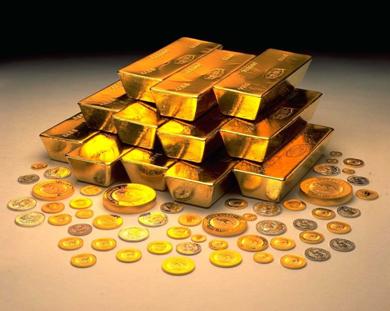
It has been shocking, but not at all unexpected. Gold yesterday dropped more than $140/ounce, completing a two day drop of over $200/ounce to $1,352. NYC Wholesale Diamonds in its monthly newsletter has been advising its clients since last Fall to be extremely cautious when purchasing gold and and heavier gold jewelry. The value has been, and continues to be in Diamond Jewelry set in gold or platinum.  A downward pattern has been established in gold, and it’s the oldest market pattern in the book.

A long-ignored asset finally gets hot, and its price rises for a while.

The rising price of the asset attracts new investors, whose investments drive prices even higher.

As the price rises, investors develop compelling explanations for why the price of the asset is rising, some of which may have a solid basis in fact.

The price continues to rise, more investors arrive, and their buying drives prices even higher.

Soon, the stories that explained the early price increases get repeated so often that they start to be regarded as fact.

The price rises even further. More investors hear the stories, and believe them, and hurry to get in on the action.

And so on.

At some point, however, for any of a number of reasons–often because the supply of the asset increases radically in response to the high prices–the spell breaks.

Despite the “story” not having changed, demand for the asset no longer outstrips supply, and the price drops.

At first, investors brush off the price drop as a temporary fluctuation–a “buying opportunity.” Then, when the price drops more, they look for temporary explanations and causes. They also often begin to point fingers–blaming individuals, organizations, or conspiracies for the price decline, anything but the theory that the “story” they bought into might not be true.

The declining price reduces demand for the asset–who wants to buy something when the price might drop?

The reduced demand then causes prices to drop more, which further reduces demand.

And so on.

Eventually, when all of the petals have fallen off the rose, the price of the asset usually ends up about back where it started. And those who bought into the story–the theory that something was “different this time,” that this asset was special–have to console themselves by learning from their experience.

Over the past decade, the asset that has transfixed investors more than any other is gold.

In the early 2000s, after drifting to a two-decade low below $300 an ounce, gold prices began to creep higher. At first, those who had been seduced by gold in the prior 20 years only to have their hopes dashed remained skeptical. Gradually, however, as gold kept marching higher, they became believers.

Gold’s endless bear market was finally over, the story went. Gold would now resume its normal trend upward. Gold, the only true “store of value” in a paper-money world, would increase its owners’ wealth while stocks, bonds, real-estate, cash, and other popular asset classes destroyed it. Gold had a naturally limited supply. Gold was beyond the reach of meddling politicians. The “hyper-inflation” of paper currency caused by the frantic “money-printing” of the world’s governments would be as nothing to gold: As the value of paper money collapsed, gold prices would soar, and those who had invested their fortunes in the shiny, permanent, coveted element would inherit the earth.

Alas…

In the past several months, gold prices have tanked.

As recently as six months ago, analysts were predicting that gold would soar to $2,000, $3,000, $5,000, or more, and these predictions were being taken very seriously.

Because this future was obvious:

The world’s governments were frantically “printing money.”

Soon, someday, inflation would soar, the value of paper money would collapse, and gold prices would skyrocket.

And, maybe, someday, that will indeed happen.

But it hasn’t happened yet.

Governments have been frantically “printing money” for five years now. But, as many respected economists suggested it would, inflation has remained remarkably subdued.

The government in Japan, meanwhile, has been frantically borrowing and printing money for more than two decades. And, even in Japan, inflation remains very low (in fact, the big problem in Japan is deflation, not inflation.)

So some cracks are showing in the story that gold believers have been telling themselves for the last five years.

The recent plunge in the price of gold may well prove to be a “buying opportunity,” at least temporarily. And the story that recently propelled gold prices to nearly $2,000 an ounce may yet entrance a whole new wave of investors, driving prices to another big spike and high.

But at some point, unless it really is “different this time,” gold prices will likely drop sharply and stay down. And then the gold fever really will break.

Leave a Comment

Filed under Uncategorized