
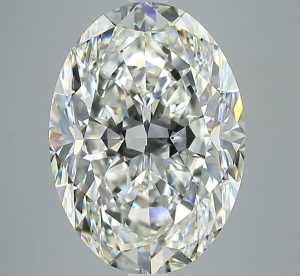
How natural diamonds have shaped the life of Minister Kenewendo and the opportunities that diamonds hold for Botswana’s future.
Botswana’s Minister of Minerals and Energy, Bogolo Joy Kenewendo, sees more than sparkle when she looks into a diamond, she sees the potential to transform the lives of millions in her country. She knows this firsthand, having witnessed Botswana develop into one of the fast growing economies in the world. Her mentors were the architects of the plan that harnessed the power of natural diamonds for the benefit of her people.
Educated all over the world through the largesse of Botswana’s support, she returned home to pay it forward for the next generation. Famously the youngest Minister in the African government under the previous administration, Minister Kenewendo has now taken on an even larger role and greater responsibility under President Boko. She shares with Only Natural Diamonds what drives her forward, and why this moment for natural diamonds is both so important and so hopeful for Botswana.
Only Natural Diamonds: To start, could you explain what natural diamonds mean to you?
Minister Kenewendo: Life. By that, I mean that diamonds have given life to me as a Motswana, and to many other Batswana. Diamonds mean the opportunity to explore the fullness of my potential. Earlier this month, when we were visiting one of our cutting and polishing factories in Botswana, I realized that every time I look into a diamond, it’s like experiencing many other universes. It’s so incredible, when you look through a diamond, you can imagine the many lives that it has lived and the many years that it has existed. So, it’s not just ‘life’ insofar as the opportunities diamonds have created for me, but also how they capture and store life over many centuries. It’s brilliant. It’s wonderful. I truly just love diamonds.
amonds have created for me, but also how they capture and store life over many centuries. It’s brilliant. It’s wonderful. I truly just love diamonds. [laughter]
When you research various cultures, every one of them has a story associated with diamonds. Jewish women used diamonds as a means of passage when they were running away from the Holocaust. Indian women have used diamonds as protection should their husbands pass away, or their family faces hardship. In all these cases, diamonds have provided a way forward for families. We’ve seen this in many countries: when a husband passed away or lost their retirement packages, their jewelry became a means of sustaining their livelihoods. Every nation, every culture has a story about holding onto or trading a diamond at the right time to sustain themselves. If this has been true for so many centuries and generations, why would that change now?
OND: How have natural diamonds shaped your life specifically?
Minister Kenewendo: Well, I first termed myself a diamond baby in 2019.
OND: Did you coin that?
Minister Kenewendo: I did. I first said this during a TED Talk in 2019. I’m a diamond baby because of the first woman minister in Botswana, Gaositwe Chiepe. She managed the negotiation with De Beers that created Debswana, which enabled us to have free health care, free education, and lives beyond our wildest dreams. It is because of her negotiation that diamonds have been able to transform our lives. I was born in a government hospital and I went to government schools. I tried a private school, but I didn’t like it so much, so I went back to the government school.
How Diamonds Funded a Generation’s Education
OND: What didn’t you like about the private school versus the government school?
Minister Kenewendo: I just couldn’t relate. I don’t come from an extremely privileged background. It’s not that my parents couldn’t afford a private school, but it just wasn’t the absolute best. I found more of a challenge in the government school. You were expected to study by yourself and to do things on your own. There was a level of independence that came with being in a government school versus the two weeks that I was in a private school. Afterward, I attended the University of Botswana and later, I studied at Pitzer College in California, all of this possible through government scholarships. I completed several summer programs at Harvard, then in Italy and all over the world.
Regardless of your background, diamond revenues have given us all a pathway to live the wildest possible lives that we can imagine.
All of these programs were sponsored by the Government of Botswana. Eventually I went for my masters degree in the UK. It was because I was working in Botswana and serving as an economic advisor to a Cabinet department that the British government saw potential and decided to sponsor me, but so did the Botswana government. Going on to work for the Botswana government has been one of the most fulfilling experiences of my life. It feels truly full circle to give back to the same institutions that gave me opportunities.
Regardless of your background, diamond revenues have given us all a pathway to live the wildest possible lives that we can imagine. Some of my former classmates went on to be traders in London and one is a famous filmmaker who went on to make a documentary for National Geographic.
OND: Did he work on the Okavango Delta project as well?
Minister Kenewendo: Yes. We’ve all gone through government schools and had similar backgrounds, and I don’t think any of us could have dreamt of the lives we’re living now. It’s all thanks to diamond revenues and how they were reinvested in our communities.
OND: Is this what drew you to government service, to give back or was there something else about service and economics that drew you in?
Minister Kenewendo: I wanted to be in the policy space. My village is very, very poor and it used to be termed extremely remote. No roads led there, and there was no electricity when I was growing up. I wanted to be a part of policymaking so I would be able to change the livelihoods of people from similar places. I wanted to make children aware that, regardless of where you come from, you can have a different life. Our generation is critical to Botswana’s development. We’ve benefited the most, and so it should be our responsibility to change what it means to be economically independent.
Diamonds and the Transformation of Botswana
OND: What do natural diamonds mean to Botswana as a country?
Minister Kenewendo: Transformation, resilience, development, and real-life value. There’s an article that we all like to cite in Botswana. In 1965, when we were seeking our independence [from the UK], a Canadian reporter said, “Oh, yet another basket case coming onto the world stage, crying for independence and yet they can barely feed themselves. It’s going to be another one of those, where the whole international community is going to need to take care of them,” or something to that effect. It was a really harsh review of Botswana seeking independence because, at the time, we were the third poorest country in the world.
My mentor, Gaositwe Chiepe, the minister who negotiated the first diamond deal, used to say that the government then had only 24 pounds to its name. Why would anyone be crazy enough to leave the United Kingdom when there were only 24 pounds to pay civil servants? What were you going to do for all the teachers, nurses, and everyone else working for the government? But, as she said, it all worked out: a year later, diamonds were discovered, and three years after that, we began mining them.
A Path Enabled By Diamonds: Independence, Discovery, and a Nation’s Trajectory
OND: I never realized that was the timeline, that they were found after independence.
Minister Kenewendo: Well, [laughter] it’s debatable when they were found. I met the gentlemen who discovered our diamonds. They knew for sure that we had diamonds in 1963, but they needed to do more exploration. So, in 1965, they actually looked and discovered that there was a sizable deposit. But in 1967, one year after independence, they said, “Well, we think there’s a lot more here.”
OND: Excellent timing, timing is everything.
Minister Kenewendo: Perfect timing. It could’ve completely changed the trajectory of Botswana. We know what happened in Sierra Leone and many other countries that had minerals. Zimbabwe and Rhodesia struggled to gain independence, had bloodshed. We got our independence because we were a barren land. It was just the Kalahari Desert and 5 cows. [laughter] Not literally, but only a few cows and 12 kilometers of paved road. Now, almost all the major roads in Botswana are paved. Over 80% of the country is electrified, and the literacy rate now exceeds 90%.
OND: The United States has a roughly 79% literary rate.
Minister Kenewendo: Well, the government has paid for free education in Botswana all the way through university, and now, some people will even be sponsored for post graduate programs and PhDs, depending on what their career requires.
Our special thanks to Sam Broekema and Only Natural Diamonds for thsi fascinating article